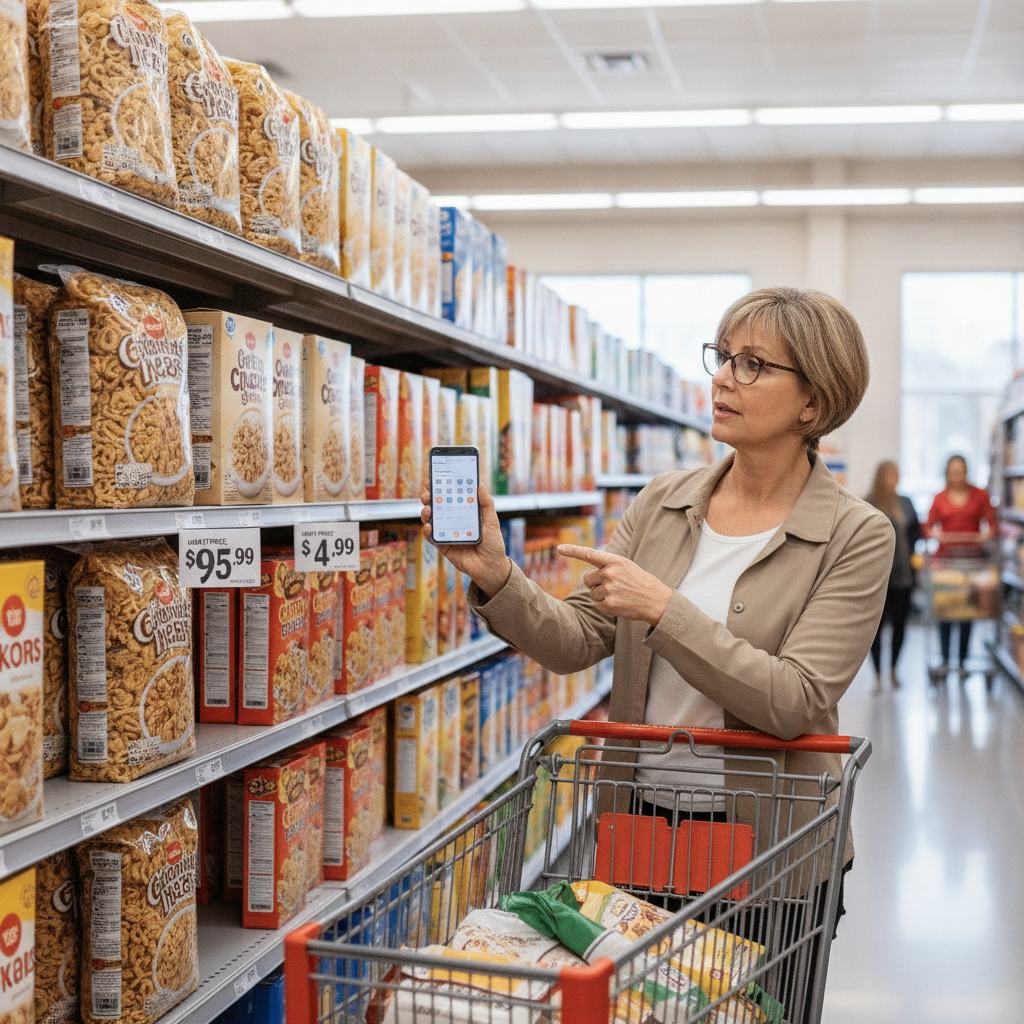
Shelf prices are designed to be noticed. Unit prices are designed to be ignored. That gap between what a product costs and what it actually costs per ounce, per sheet, or per serving is where most grocery overspending quietly lives — and most shoppers never look closely enough to catch it.
If you've ever walked out of a warehouse store feeling like you scored, or picked up a "sale" item at a conventional supermarket without checking whether it was actually cheaper, this is worth your attention. Unit pricing is one of the most reliable tools for comparing value across grocery formats, and once you start using it consistently, the differences are difficult to unsee.
Start by Understanding What Unit Price Actually Measures
Unit price tells you the cost of a single standardized measurement — typically per ounce, per fluid ounce, per count, or per pound. Most grocery stores are required to display it on shelf tags, usually in smaller print near the bottom. The challenge is that different stores don't always use the same unit for the same product, which makes direct comparison tricky at first. A paper towel might be priced per sheet at one store and per 100 sheets at another. Getting comfortable with this inconsistency is the first step toward making unit pricing genuinely useful.
Compare Across Store Formats, Not Just Across Brands
Conventional supermarkets, discount grocers like Aldi, warehouse clubs like Costco, and specialty stores like Trader Joe's all operate with different pricing structures. A bulk purchase at Costco might show a lower unit price on dish soap, but a smaller bottle at Aldi can sometimes land at a comparable or even lower unit rate. The format of the store doesn't automatically determine the best deal. You have to check. Specialty and natural grocery stores often carry products where the shelf price looks reasonable but the unit price quietly reflects a significant premium over what you'd pay elsewhere.
Watch for Package Size Manipulation at Eye Level
Manufacturers and retailers regularly adjust package sizes without adjusting shelf prices — a practice that keeps the sticker price familiar while reducing what you're actually getting. Cereal boxes, yogurt containers, and canned goods are especially prone to this. The shelf price stays the same or drops slightly, which reads as neutral or even positive, but the unit price climbs. Checking unit price on products you buy repeatedly is one of the easiest ways to notice when this has happened without any announcement.
Use the Flipp App and Store Apps to Pre-Compare Before You Shop
The Flipp app aggregates weekly circulars from multiple grocery chains and lets you browse sale items before you leave the house. Some store apps, including the Kroger app, display unit pricing directly in their digital product listings. Using these tools before a trip lets you identify which store genuinely has the better deal on specific items rather than assuming one format always wins. Building a short list of your ten most frequently purchased items and tracking their unit prices across two or three local stores over a few weeks gives you a reliable baseline that holds up over time.
Don't Assume Bigger Packages Always Win on Unit Price
The conventional wisdom that larger sizes are always cheaper per unit is worth questioning regularly. Retailers know that assumption exists and don't always honor it. In some cases, a medium-sized package of a product carries a lower unit price than the jumbo version — especially when the jumbo size is a national brand and a smaller size is the store's own label. Private-label products at stores like Costco, Aldi, and Trader Joe's frequently beat name-brand unit prices at conventional supermarkets even when the package sizes aren't particularly large.
Factor In Spoilage When Evaluating Bulk Unit Prices
A lower unit price only saves money if you actually use what you buy. Fresh produce, dairy, and bread purchased in bulk at a warehouse store carry a real spoilage risk that effectively raises the true unit cost if half the package goes to waste. Unit pricing math works cleanly for shelf-stable items — canned goods, paper products, dried pasta, cleaning supplies. For perishables, the calculation needs to include a realistic estimate of how much your household will use before the product expires. A slightly higher unit price on a smaller package can represent genuine savings if the alternative is throwing a third of it away.
Check Unit Prices on Sale Items With Extra Scrutiny
Sale tags are among the most effective ways stores direct attention away from unit price and toward shelf price. A "buy two, get one free" promotion or a percentage-off sticker creates urgency that discourages careful math. Before adding a promoted item to your cart, look at the unit price after the discount and compare it to the everyday unit price of a similar product — including store brands and competing formats. Sales genuinely do produce lower unit prices on many items, but not on all of them, and the ones that don't are easy to spot if you're in the habit of checking.
Unit pricing cuts through the visual noise of retail design and gives you a single number that allows honest comparison across brands, package sizes, and store formats. Making it a regular part of how you shop — not just an occasional exercise — is what transforms it from a useful trick into a reliable habit that consistently keeps spending in check.