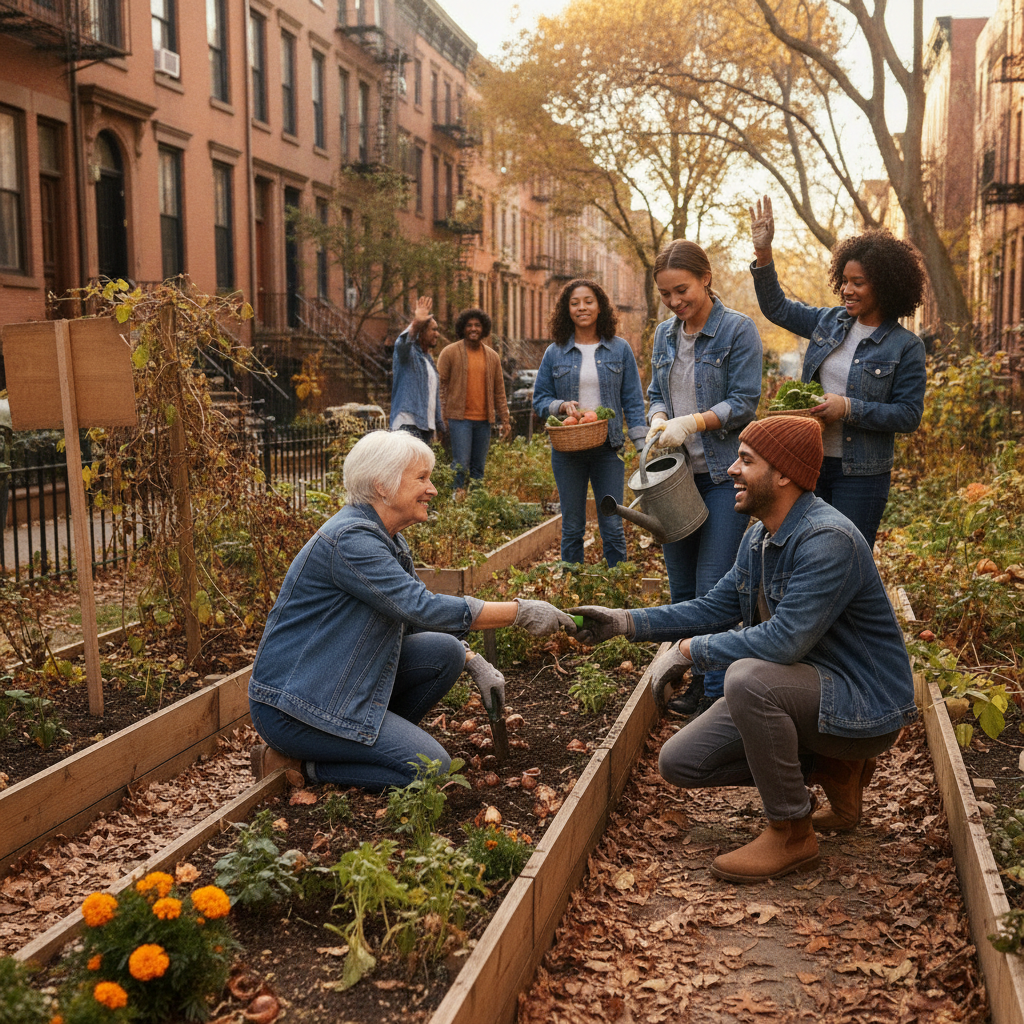
Repeated, low-pressure contact with the same people over time is how most lasting social bonds actually form — not through dinner party invitations or structured networking events. Scheduled socializing has its place, but it often creates connection without continuity. A seasonal volunteer commitment in your own neighborhood works differently. It puts you in the same place, with the same people, doing something that matters, week after week. That rhythm is what builds the kind of familiarity that eventually feels like belonging.
What Makes Neighborhood Volunteering Different From Other Social Formats?
Most adult social activity is organized around mutual preference — you invite people you already like, to places you already enjoy, at times that suit everyone's calendar. That's pleasant, but it doesn't stretch your social world. Neighborhood volunteering does something different: it introduces you to people you'd never cross paths with otherwise. The retired teacher, the young family three blocks over, the local business owner who shows up every Saturday morning. Shared purpose creates a kind of social glue that shared taste alone rarely manages.
How Does Repetition Build Something Planned Events Can't?
The social value of a volunteer commitment is inseparable from its regularity. You're not meeting people once at a cocktail party and hoping for follow-up. You're showing up to the same park cleanup, the same food pantry shift, the same neighborhood beautification crew, season after season. Names get remembered. Inside jokes develop. Trust builds in small increments without anyone having to try particularly hard. That's the mechanism: low-stakes repetition over time, which is precisely what most adult social lives are missing.
When in the Year Should You Start?
Seasonality matters more than most people realize when it comes to volunteer momentum. Spring and early fall tend to be the most natural entry points. Spring brings outdoor projects — community garden plots, park restoration, neighborhood clean-up days — when energy is high and participation is broad. Early fall carries a similar energy, often tied to back-to-school rhythms and a collective sense of fresh starts. Starting at these transition points means you're joining a group that's already re-energizing, which makes the initial step feel far less like an interruption of your existing routine.
What If the Season Is Already Underway?
Joining mid-cycle is completely fine, and in some ways preferable. Groups that are already in motion tend to be warmer to new arrivals than groups forming for the first time, where everyone is still figuring out the dynamic. Reach out directly, show up once without committing to anything, and see how it feels. Most organized neighborhood volunteer efforts are actively looking for consistent people, not just warm bodies for a single afternoon.
How Do You Find the Right Opportunity Close to Home?
The most useful tools for this are the ones already in most people's pockets. Nextdoor is probably the most immediate starting point — neighborhood-specific posts about recurring volunteer projects appear regularly, and you can search by proximity. VolunteerMatch lets you filter by cause, location, and time commitment, which helps you find something sustainable rather than just something available. Idealist tends to skew toward longer-term commitments but is worth browsing for anything that operates at the neighborhood level. For hyperlocal efforts — the kind organized by a single block association or community garden — Facebook Groups often surface what the larger platforms miss.
What Kind of Commitment Actually Works Long-Term?
The mistake most people make is over-committing at the start. One morning every two weeks is more sustainable than every weekend, and sustainability is the whole point. You're not trying to log hours — you're trying to build a rhythm that outlasts your initial enthusiasm. Pick something with a session length that feels genuinely manageable, not aspirationally ambitious. The social roots you're after grow slowly, and they need consistent watering more than intense bursts of attention.
What Happens to Your Sense of Place Over a Full Season?
Something shifts when you've spent three or four months contributing to a specific block, park, or community space. The neighborhood stops being a backdrop and starts feeling like somewhere you actually belong. You know the names of the people who show up. You notice when someone is absent. You have something to talk about with people you pass on the street. That transformation — from resident to neighbor — is quieter than it sounds, but it changes how grounded you feel in daily life in ways that scheduled socializing almost never does.
The good news is that none of this requires dramatic social effort or a particularly outgoing personality. It just requires showing up to the same place, for the same purpose, with enough consistency that the calendar does most of the work for you. If you've been meaning to feel more rooted where you live, a single seasonal volunteer commitment — chosen carefully and kept consistently — is one of the most practical ways to start.