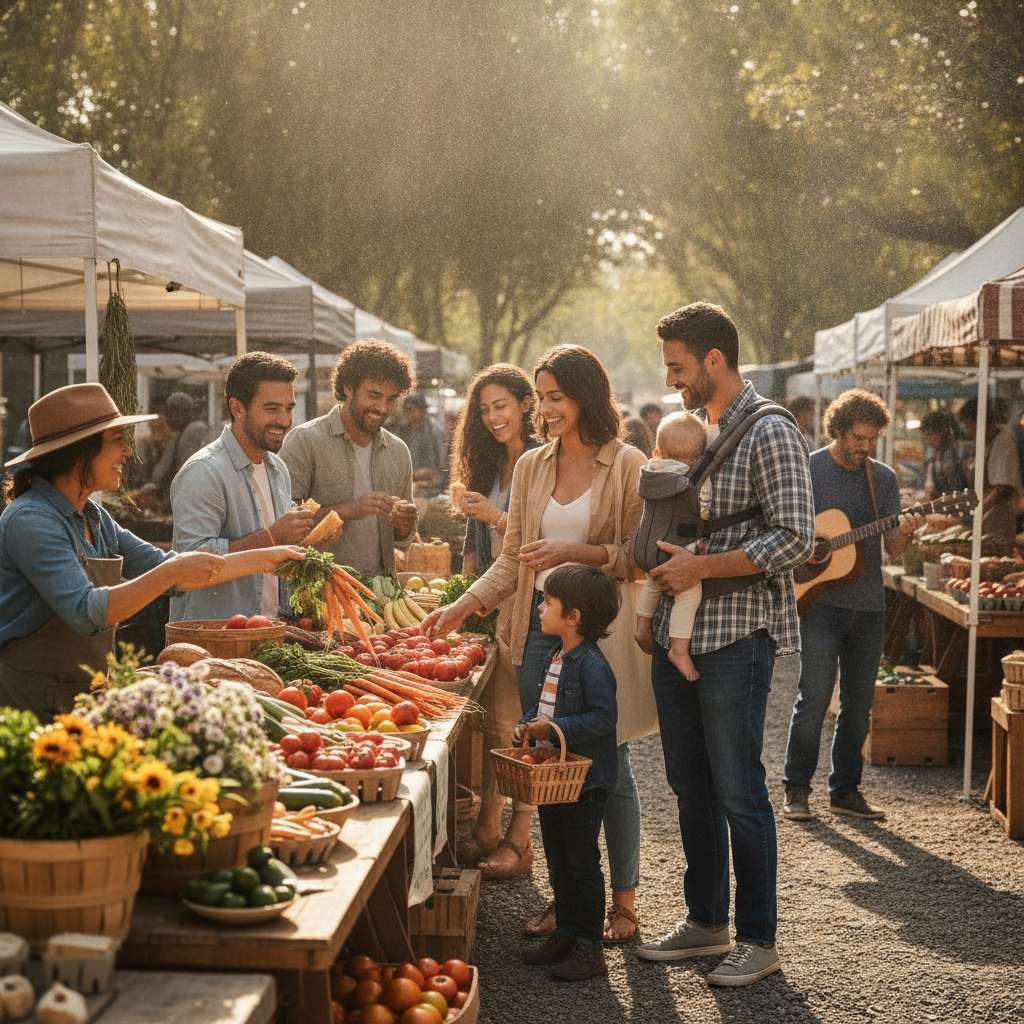
There is a particular quality to Saturday mornings that resists the pace of the rest of the week. The light feels different, the streets move at a different rhythm, and for those who have discovered the quiet power of a regular farmers market visit, something else is present too — a sense of continuity, of belonging to a place and its seasons in a way that a Tuesday grocery run simply cannot replicate. The Saturday farmers market, when treated not as an occasional errand but as a standing ritual, has a way of reshaping not just what a person eats, but how they think about food, time, and the people who grow things.
When Routine Becomes Something More Than Habit
There is a meaningful difference between a habit and a ritual. A habit is something repeated automatically, often without attention. A ritual, by contrast, carries intention — it asks for a degree of presence, a willingness to slow down and engage. When someone commits to the same market stall, the same Saturday-morning walk through rows of produce and preserves, week after week across seasons, the visit stops being transactional and starts being relational. Vendors begin to recognize faces. Regulars learn which farm grows the tomatoes that actually taste like something. Over time, the market becomes less a place to shop and more a place to belong, a concept anthropologists call a *third place* — a social environment that is neither home nor workplace but somewhere in between, where community cohesion is quietly maintained.
Markets like the Portland Saturday Market in Oregon or the Ferry Plaza Farmers Market in San Francisco have long understood this dynamic intuitively. Their regulars don't come exclusively for the produce, though the produce is genuinely exceptional. They come because those two hours on a Saturday morning have become part of how they understand their week. The ritual anchors them. And that anchoring effect — that sense of a reliable, pleasurable constant in an otherwise unpredictable schedule — turns out to do something important for overall wellbeing that's difficult to quantify but easy to recognize once it's in place.
The Slow Education of Eating Seasonally
One of the more underappreciated effects of a consistent market habit is what it teaches about seasonality — not through reading or instruction, but through direct, repeated experience. A person who visits the same market across the full arc of a year watches strawberries arrive, peak, and disappear. They notice when the stone fruit takes over, when the root vegetables crowd out the summer squash, when the apple varieties begin to multiply into autumn. This is *phenological literacy*, an awareness of the natural calendar that industrialized food systems have largely obscured. A supermarket in January looks almost identical to a supermarket in July. A farmers market in January looks entirely different.
This slow education changes purchasing behavior in ways that feel less like discipline and more like genuine preference. Seasonal eating becomes intuitive rather than effortful. A shopper who once bought imported asparagus in November starts finding the idea slightly strange once they've spent a full year watching asparagus show up exactly when it should — in spring, briefly, and then not again for twelve months. The market teaches patience and rewards it with flavor. The produce available at peak season from a local farm tends to be genuinely superior in taste to the same vegetable shipped long distances and harvested early, and once that difference is experienced repeatedly, it becomes a difficult standard to un-know.
What the Vendor Relationship Actually Provides
The exchange at a farmers market stall is structurally different from any transaction at a large grocery chain, and that difference matters in ways that accumulate over time. When someone asks the person behind the table how the season has been, they're talking to the individual who actually made the decision about which variety of pepper to plant, who watched the weather with the particular anxiety that comes from having a livelihood depend on it. That directness — what's sometimes called *provenance transparency* — creates a form of accountability that is almost entirely absent from conventional retail food shopping. It also creates connection.
Vendors at established markets like the Dupont Circle FreshFarm Market in Washington, D.C., often describe their regulars as something approaching extended community. The conversation across the table might be brief, but it's consistent. It carries context from previous weeks. It builds into something that genuinely resembles a neighborly relationship, which is rarer in modern urban life than most people would prefer to admit. For the shopper, that relationship adds a layer of meaning to the food itself. Knowing that the honey came from a specific beekeeper who spent time explaining the difference between spring and fall harvests makes the jar of honey on the kitchen shelf something more than a grocery item.
Making the Ritual Stick Without Overthinking It
The rituals that last tend to be the ones that require the least willpower to sustain — not because they're effortless, but because they've been structured to feel genuinely rewarding rather than obligatory. For a farmers market habit to become a true weekly anchor, a few practical considerations help. Arriving at roughly the same time each week matters because the best items — the limited-quantity specialty cheeses, the heritage grain loaves from a small baker — tend to go early. Bringing a reliable tote or basket rather than accumulating plastic bags becomes part of the rhythm. Giving yourself permission to buy something purely for the pleasure of trying it, without a specific recipe in mind, keeps the experience exploratory rather than mechanical.
For those building out a broader weekly structure around intentional local engagement, the farmers market visit pairs naturally with other standing rituals — a preferred coffee stop nearby, a bookstore browse on the same block, a walk through a neighborhood that feels worth knowing better. The market becomes not just a destination but an anchor point around which a more deliberate Saturday morning can take shape. That kind of layered, place-based routine is one of the quieter antidotes to the sense of disconnection that characterizes much of contemporary urban life.
The Saturday morning that began with a simple errand — buy some vegetables, maybe some eggs — becomes, over time, something recognizably larger. The person who returns to the same stalls week after week, who knows the growing season by feel and knows the vendors by name, is living a relationship with food and place that most of the food system actively discourages. That relationship doesn't demand a dramatic lifestyle overhaul. It begins with just showing up, on a Saturday, with a basket, and doing it again the following week.