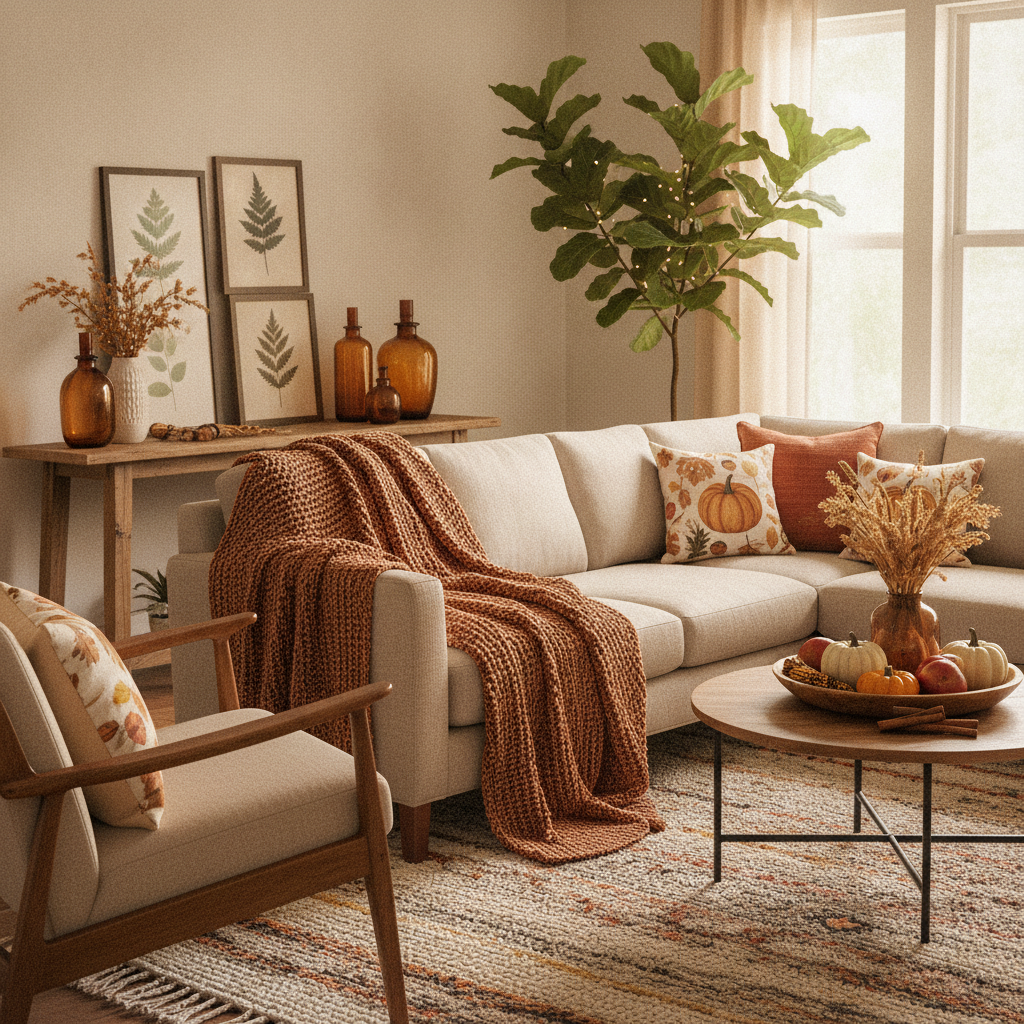
There is a particular kind of domestic restlessness that settles in quietly — not dramatic enough to prompt a renovation, not urgent enough to justify a shopping trip, but persistent enough to make a home feel like it has stopped speaking to the person living in it. The rooms look the same as they did six months ago, and while nothing is technically wrong, something has gone still. This feeling is more common than most people acknowledge, and it tends to peak at seasonal transitions, when the light changes and the air shifts but the interior remains unchanged, like a photograph that hasn't kept up with its subject.
The solution that has quietly gained traction among thoughtful home enthusiasts isn't a capsule wardrobe for furniture or a Pinterest-driven overhaul. It's something considerably more restrained and, ultimately, more satisfying: assigning a single room a rotating seasonal theme each quarter, working entirely within what's already owned, rearranging what exists, and drawing attention to different corners, textures, and objects as the year moves through its rhythms.
The Philosophy Behind the Rotating Room
The concept borrows loosely from *wabi-sabi*, the Japanese aesthetic philosophy that finds beauty in impermanence and incompleteness. Rather than treating a home as a finished product, the rotating room approach treats it as a living space that evolves in conversation with the seasons. Each quarter — roughly aligned with spring, summer, autumn, and winter — one room becomes the focus of intentional, low-cost attention. The rest of the home continues as usual. This narrow focus is precisely what makes the practice sustainable; it prevents the overwhelm that derails most home refresh attempts before they begin, and it creates a manageable ritual rather than a sprawling project.
The chosen room doesn't need to be large or prominent. A reading nook, a bedroom, a kitchen corner, or a home office all qualify. What matters is that the space receives concentrated attention: a shift in the arrangement of furniture, a change in the objects displayed on shelves, a swap of throw pillows or a single piece of artwork moved from another wall. Nothing purchased. Nothing discarded unless it was already destined to go.
Working With What's Already There
The deeper discipline of this practice lies in resisting the reflex to buy. Most homes contain a quiet surplus — items tucked into closets, stacked in storage areas, placed on surfaces so long ago they've become invisible through familiarity. A ceramic vase sitting in a hallway for three years carries no emotional charge precisely because it has never moved. Placed on a bedroom nightstand in autumn, surrounded by a few gathered pinecones or a linen cloth in deep ochre, it becomes something different. The object hasn't changed; the context has.
Brands like MUJI and Brimnes have long understood that modularity and restraint are their own form of design luxury, but the rotating room principle takes that philosophy further by rejecting even the minimal purchase. Objects from one room migrate to another. A kitchen bowl becomes a display vessel. A summer's collection of botanical prints, stored flat in a portfolio, emerges for spring. A heavy wool blanket that spent the warmer months folded in a linen closet transforms a sitting chair into something cozy and deliberate by November. The process becomes archaeological — a rediscovery of things owned and half-forgotten.
The Quarterly Rhythm and How to Pace It
The quarterly structure is not arbitrary. It aligns closely enough with seasonal change to feel resonant without demanding constant effort. Most people find that dedicating a single afternoon at the start of each three-month period is sufficient — somewhere between two and four hours of unhurried attention. The work is contemplative rather than exhausting. It involves standing in a room and asking which objects feel heavy and overexposed, and which have been overlooked.
Neighborhoods in cities like Portland, Austin, and Asheville have seen a broader cultural movement toward *slow living* — a term that describes a deliberate deceleration of consumption and a prioritization of depth over novelty. The rotating room fits naturally within this sensibility. It satisfies the genuine human desire for change without feeding the cycle of purchase and disposal that often leaves people feeling more cluttered rather than more refreshed. The rhythm of four rooms, four quarters, one home — with the same objects moving through different configurations — produces a sense of seasonal ceremony that many people find surprisingly grounding.
Making the Shift Last Through the Quarter
Once the room has been rethemed, the small details sustain it. Scent is particularly powerful here: a beeswax candle lit during evenings in winter, a small dish of dried lavender in a summer bedroom, a bowl of citrus left on a reading table in spring. These additions cost very little and carry the theme into the olfactory, which is often more immediately felt than the visual. Similarly, sound can be incorporated through a deliberate playlist associated with the season, played softly during the hours spent in that particular room.
The room shouldn't feel precious or performative — it should feel inhabited. The goal is not a styled photoshoot but a lived space that feels slightly more alive than it did before the attention was paid to it. If you step into the room and something about the arrangement makes the hour feel different than it would have otherwise, the practice has done its work.
What the Practice Returns to Its Beginning
There is something quietly profound about a home that changes without spending — that regenerates from within rather than importing novelty from outside. The domestic restlessness that opened this reflection isn't ultimately about furniture or objects at all. It's about attention. A home that receives it, even quarterly, even for a single afternoon directed at a single room, tends to give it back. The seasons turn, the light adjusts, and the space — worked and reworked with care — continues to feel like somewhere worth returning to.