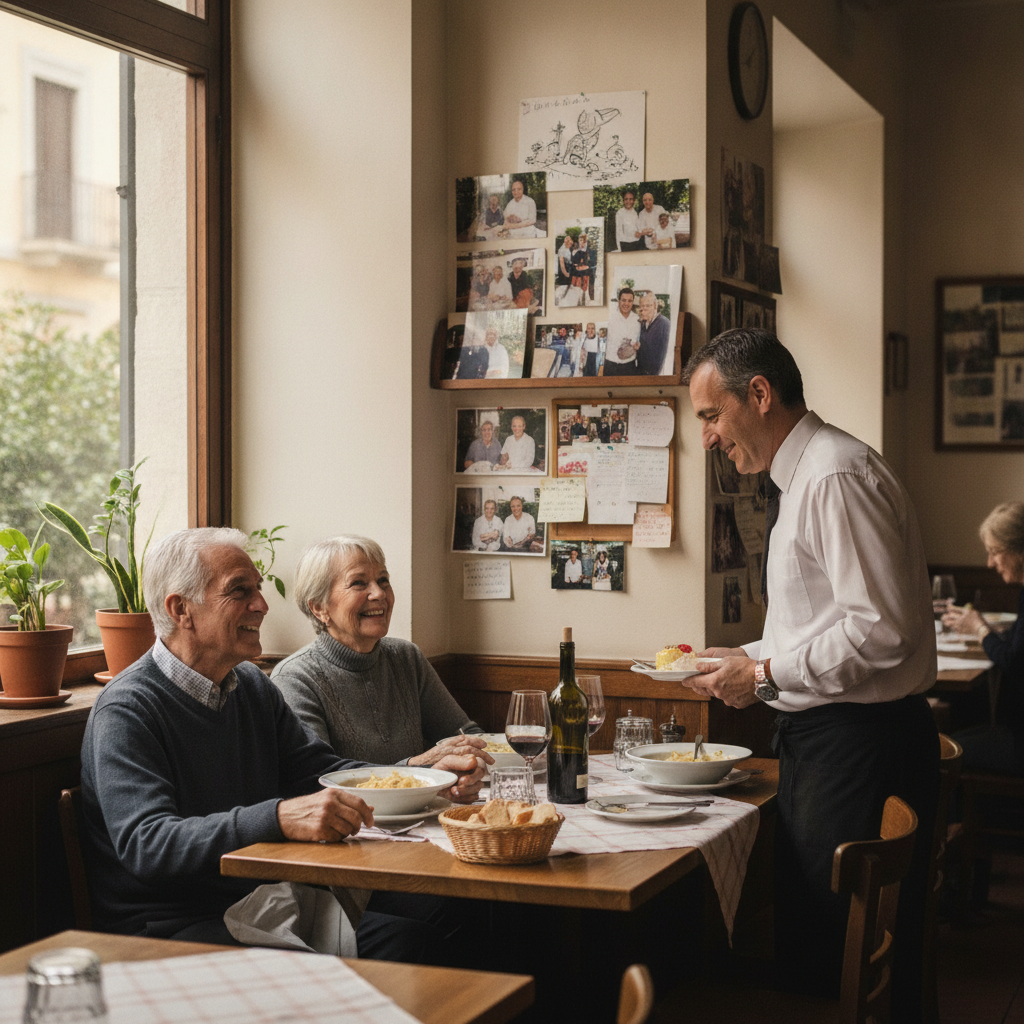
There is a particular kind of satisfaction that comes only with repetition — the knowing glance from a server who remembers your usual order, the way a familiar room feels different on a rainy Tuesday than it does on a bright Saturday afternoon, the slow accumulation of small observations that eventually add up to something that feels, unmistakably, like belonging. Most people never quite reach that threshold because the pull toward novelty is strong, and the city — whether that city is Portland, Austin, or a smaller town with a single beloved block of restaurants — always seems to be offering something new to try. But the pursuit of endless variety, while exciting on its surface, tends to produce a kind of dining experience that is wide and shallow rather than narrow and deep.
What Does It Actually Mean to Know a Restaurant?
Knowing a restaurant is not the same as having eaten there once, even if the meal was excellent. True familiarity with a place develops across multiple visits, across different seasons and moods and occasions, and it reveals itself in details that a first-time diner simply cannot access. A regular at a neighborhood trattoria in Chicago's Andersonville neighborhood, for instance, will notice when the kitchen has shifted its pasta supplier, or when the house wine list has been quietly refreshed. They understand instinctively which dishes are consistent anchors of the menu and which are experiments that rotate in and out based on what's available. This layered understanding is not the result of any single revelatory meal — it is the product of patient, repeated attention, the same way that knowing a piece of music well enough to hear the subtle variations in different performances takes many listenings, not just one.
How Familiarity Changes What You Taste
Repetition does something genuinely interesting to the sensory experience of eating. When a dish is encountered for the first time, the mind is busy cataloguing — identifying textures, comparing flavors to existing references, forming an overall impression. It is an evaluative mode, useful but limited. On a third or fourth visit, that cognitive work has already been done, and attention becomes freer, more granular. A diner who has ordered the same braised lamb at a particular restaurant several times starts to notice the way the chef's seasoning philosophy changes subtly with the seasons, or to appreciate a specific interplay of acidity and richness that blurred past awareness on the first pass. This is similar to what wine professionals call *terroir* — the accumulated character of a place expressing itself over time — and it applies equally well to a chef's particular vision as it unfolds across many meals. The experience deepens not because the food has changed, but because the eater has.
Regular patronage also tends to unlock parts of a restaurant's identity that are invisible to the occasional visitor. Staff at places like Nopalito in San Francisco or a beloved corner bistro in a smaller city often extend a quiet, unpretentious generosity to familiar faces — an off-menu suggestion, a heads-up about a dish that's particularly good that week, a willingness to accommodate preferences without ceremony. This is not favoritism so much as the natural warmth that develops between people who interact regularly and with genuine goodwill. The transactional energy of a first visit gradually gives way to something that resembles, in small but real ways, the dynamic of a neighborhood relationship. The restaurant becomes less a venue to evaluate and more a place to inhabit.
Why Novelty Alone Leaves Something Missing
The cultural appetite for novelty in dining is well documented and, in many ways, entirely understandable. New restaurants represent creative risk-taking, the ambitions of a chef or a family trying something genuinely different, and the excitement of encountering an unfamiliar cuisine or concept for the first time. Food media, recommendation apps, and platforms built around discovery have made the hunt for the next great meal into a kind of sport, and there is real pleasure in that hunt. But when novelty becomes the primary organizing principle of a dining life — when every meal must be a new destination, a new Instagram-worthy discovery — something quietly slips away. The experience becomes optimized for the first impression, which is the thinnest possible layer of what a meal can offer. It is a diet of debuts with no follow-through, and it leaves the eater permanently in the position of stranger rather than guest.
This is not an argument against trying new restaurants. Discovery matters, and a city's food culture depends on people being willing to take a chance on an unfamiliar name. But there is a meaningful difference between a life that includes both discovery and loyalty versus one that treats every meal as a one-time audition. The former is richer, more textured, and — perhaps counterintuitively — more satisfying over time. Commitment to a handful of places creates a dining rhythm that a constant rotation of new venues simply cannot replicate.
How Returning Regularly Supports the Places That Deserve It
There is also a practical dimension to this that sits comfortably alongside the experiential one. Independent restaurants operate on margins thin enough that a handful of loyal regulars can make a genuine difference to a place's long-term survival. When someone returns week after week to a neighborhood spot they genuinely love, they are participating in something larger than their own satisfaction — they are helping sustain a particular kind of culinary culture that chain restaurants and delivery-optimized ghost kitchens cannot replace. This quiet form of local investment requires nothing dramatic, no fundraising or advocacy. It just requires showing up again.
For you, the shift might begin simply: instead of asking where to eat next, ask where you haven't been back to in too long. Pick a restaurant that left a strong impression — somewhere in your own neighborhood or a nearby district — and return with the deliberate intention of paying closer attention than you did the first time. Order something familiar alongside something new. Talk to the staff if the moment allows. Let the experience accumulate rather than always starting from zero. Over time, a small collection of places known deeply will offer more than a long and restless list of places visited once.
The most satisfying dining life, it turns out, is less about coverage and more about depth — and depth, like most things worth having, requires going back.