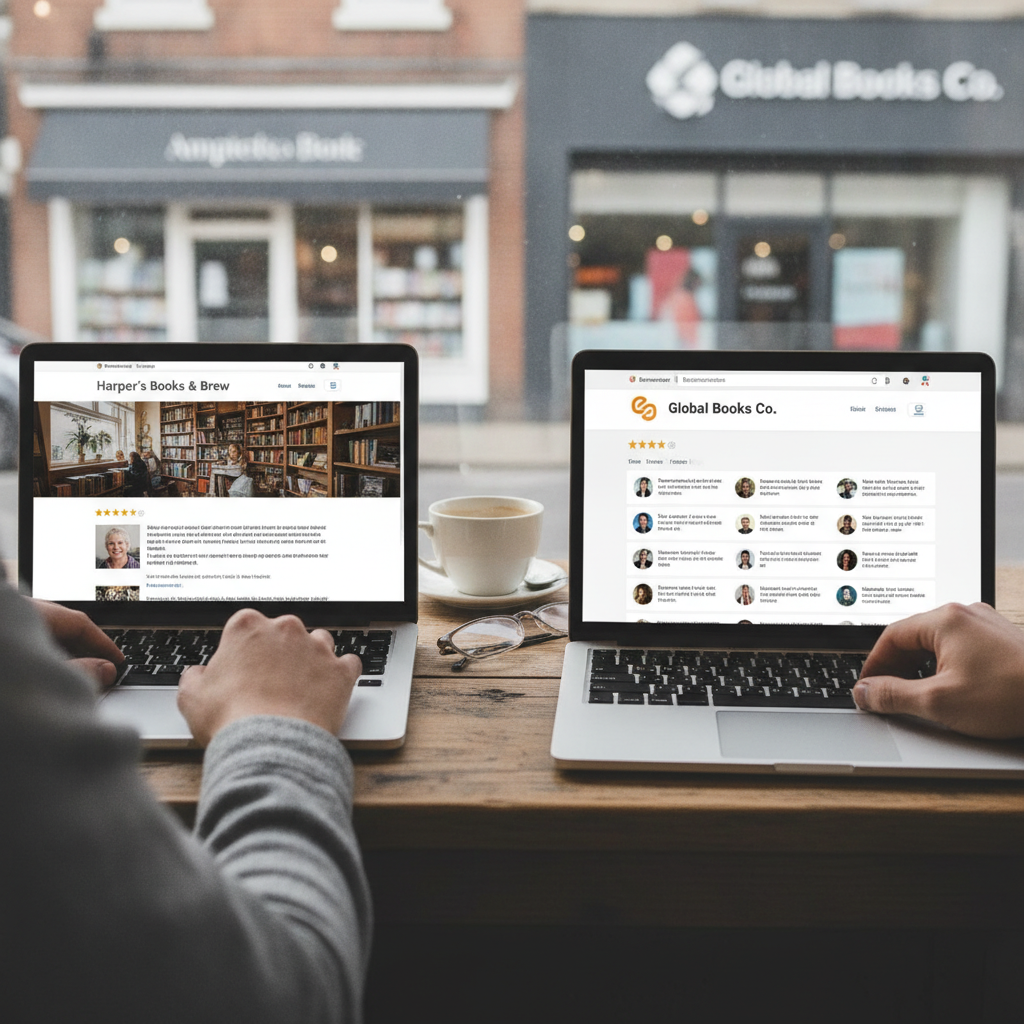
Most shoppers read reviews the same way regardless of where they're shopping — scanning for star ratings and skimming a few comments before deciding. That habit works reasonably well for chain retailers, but it can lead buyers astray when they apply the same logic to independent local shops, where the review ecosystem operates by entirely different rules.
How Does Review Volume Change What Ratings Actually Mean?
Chain stores — think Target, Best Buy, or a national pharmacy — collect thousands of reviews across standardized products and consistent service models. A 4.2-star average on a product sold at a chain carries statistical weight because it reflects a large, diverse pool of buyers. An independent local shop with 47 reviews is operating in a completely different context. A single bad experience from a difficult customer can drag a boutique's rating down more than it would for a store with ten thousand reviews. Smart shoppers look past the aggregate number and consider sample size first.
What Makes the Language in Local Reviews More Revealing?
Local shop reviews tend to be far more specific than chain store reviews, and that specificity is the signal worth chasing. When someone reviews a neighborhood coffee roaster like Onyx Coffee Lab or a local tailor, they're often describing a personal interaction, a particular product run, or a distinctive detail about the space. Phrases like "asked about my preferences before recommending anything" or "they remembered my order from three months ago" reveal something meaningful about how the business operates. Vague praise that could apply anywhere — "great customer service," "good prices" — is worth less than the textured, particular kind.
How Should Negative Reviews Be Weighed Differently for Small Businesses?
Negative reviews function differently when the business in question has a small, tight-knit customer base. A single one-star review from someone describing a miscommunication about a custom order isn't the same warning sign it would be at a large retailer with consistent fulfillment processes. The relevant question is whether the owner responded, and how. Independent shops that reply thoughtfully to criticism — acknowledging the issue, explaining what changed — are signaling something chains almost never bother to signal: that a real person is paying attention. That response pattern is itself a quality indicator.
Why Do Reviewer Profiles Matter More for Local Shops?
On platforms like Yelp or Google Maps, a reviewer's history is publicly visible, and for local shops, that context matters enormously. A reviewer who has left dozens of detailed, balanced assessments across several local businesses carries more credibility than someone whose only review is a one-star complaint. Local shop owners often know their regulars by name, and longtime patrons who review repeatedly — even if not always glowingly — tend to give a more accurate picture of what the day-to-day experience actually looks like. Checking a few reviewer profiles takes two minutes and filters out the noise considerably.
What Patterns Across Multiple Reviews Signal Consistent Quality?
For chain stores, patterns in reviews often track product quality — a specific sneaker model that runs narrow, a blender with a lid that doesn't seal properly. For independent shops, the patterns to look for are about the business itself: consistent mentions of knowledgeable staff, fair pricing, reliable hours, or exceptional craftsmanship. If five separate reviewers at a local home goods store all mention that the owner offered a repair instead of a replacement, that's a pattern that speaks to values, not just performance. Quality at a small business is often embedded in how the owner thinks, and repeated reviewers tend to surface that.
How Can You Put This Into Practice Before Your Next Local Purchase?
Before visiting an independent shop you've never tried, spend a few extra minutes reading reviews with fresh eyes. Skip the star rating entirely at first and read the text of the five most recent reviews and the five most critical ones. Look for specificity, owner responses, and any repeated phrases that suggest a consistent experience. Cross-reference on two platforms — Google and Yelp often attract different reviewer demographics, which gives a broader picture. If a shop like a local bookstore or specialty kitchen supply store shows up consistently in neighborhood-specific community groups or apps like Nextdoor, that organic word-of-mouth is often the most reliable signal of all.
As review platforms continue to refine how they surface local business content — with AI summaries and curated highlights becoming more common — the raw review text itself may become harder to access at a glance. Shoppers who develop the habit of reading behind the headlines now will be better positioned to make confident, informed decisions as those tools evolve. The ability to read reviews critically, rather than passively, remains one of the most practical shopping skills a person can build.