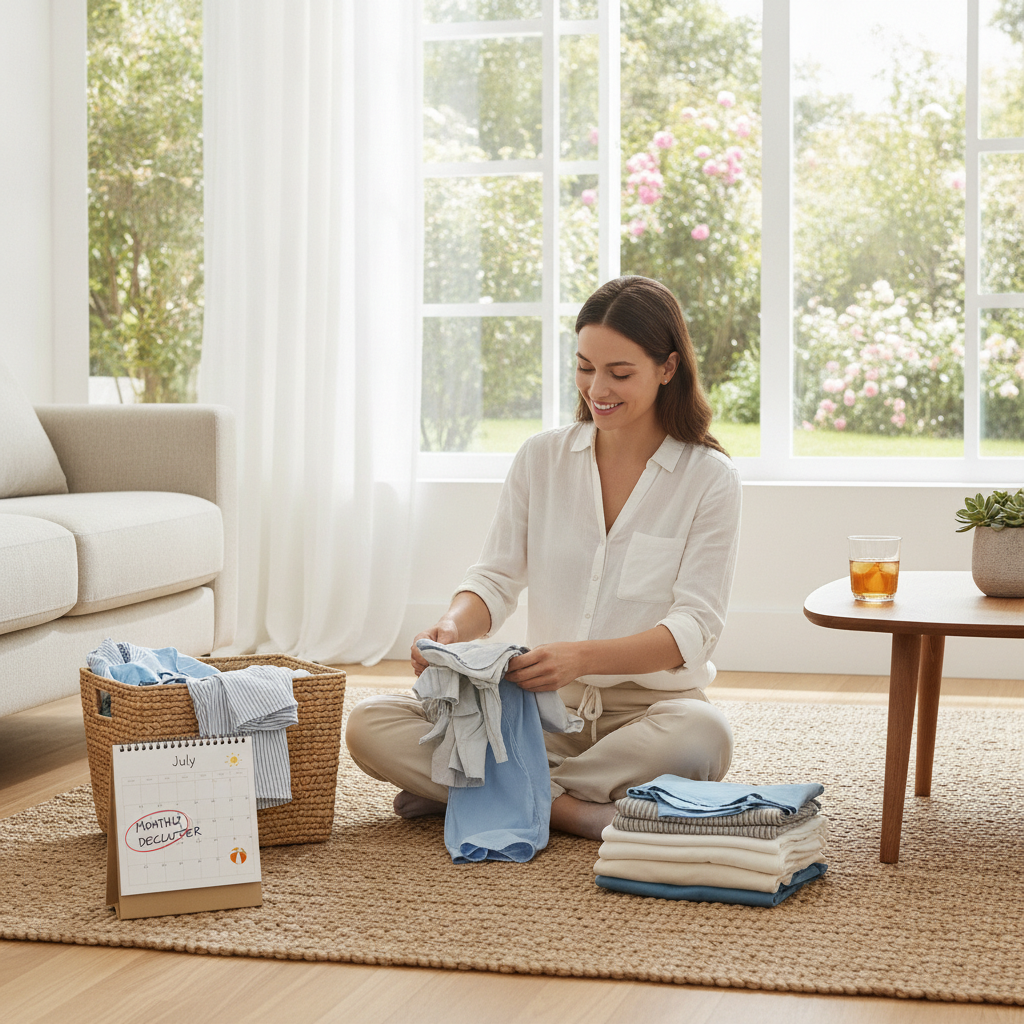
Clutter has a way of accumulating quietly, almost invisibly, until one day you open a closet and feel a small wave of dread wash over you. Most people don't struggle with decluttering because they lack motivation — they struggle because they never built a reliable system for when it actually happens. The chore feels random, reactive, and heavy. But when you connect a monthly declutter session to a seasonal trigger, something shifts. It stops being a task you postpone and becomes something the calendar practically handles for you.
Why Triggers Work Better Than Willpower Alone
Habit research consistently points to the same pattern: behaviors that are tied to existing cues become automatic far faster than behaviors that rely on motivation to start. Seasonal triggers — the first frost, the clocks changing, the first weekend of a new school year — are powerful because they're emotionally vivid and culturally reinforced. You already notice them. Attaching a declutter session to one of these moments means you're borrowing existing mental attention rather than generating new motivation from scratch. The trigger does the heavy lifting so you don't have to.
Matching the Trigger to the Right Season
Not every seasonal cue carries the same psychological weight, and the one that works best tends to be the one that already signals change in your daily life. For a lot of people, early autumn is particularly effective — kids go back to school, routines reset, and there's a natural impulse to organize. Others find the post-holiday window in early January more compelling, when excess feels especially visible. Apps like Notion or a simple paper calendar work equally well for marking these anchor points. The key is choosing one season and staying consistent year after year.
Starting With a Single Room or Zone
One of the most common reasons a declutter session collapses before it's done is scope. When the whole house is theoretically on the table, the mind resists starting. Narrowing your session to a single room — or even a single zone like a linen closet, a kitchen cabinet row, or a bedroom corner — makes the task feel manageable before you begin. Over months and seasons, each focused session builds on the last. By the time a year has cycled through, you've touched nearly every corner of the house without ever feeling overwhelmed in one sitting.
Using Seasonal Context to Make Decisions Easier
Season-specific decluttering has a practical advantage beyond habit formation: context makes decisions faster. When you're sorting through winter coats in late March, the question of whether you actually used something this past season is fresh and honest. When you're clearing out the garage before summer, you know exactly which tools and sports equipment you actually reached for. Goodwill, The Salvation Army, and local Buy Nothing groups are natural destinations for items that didn't make the cut. The seasonal lens removes ambiguity from what often feels like an endless maybe pile.
Building a Simple Pre-Session Ritual
A short ritual before your session begins signals to your brain that a defined block of focused activity is starting — similar to how stretching signals the body before a workout. This doesn't need to be elaborate. Brewing a specific tea, putting on a playlist you only use for this purpose, or setting a timer for ninety minutes can all serve as reliable on-ramps. The ritual reinforces the habit loop: trigger, ritual, session. Over several repetitions, the ritual alone starts to generate momentum before you've even opened a single drawer.
Keeping a Running Discard Log Between Sessions
One thing that makes monthly declutter sessions more efficient is having a small ongoing log — a note in your phone or a sticky list on the fridge — where you record items you notice between sessions that are ready to go. When something breaks, when you realize you haven't touched an appliance in months, when a piece of furniture stops fitting the way you use a room, you log it. This way, your scheduled session isn't spent re-deciding everything from scratch. You arrive with a shortlist already in hand and spend your time executing rather than deliberating.
Celebrating the Cleared Space, Not Just the Effort
Habits are reinforced when the outcome feels rewarding, and with decluttering, that reward is often immediate and physical. After a session, take a few minutes to actually stand in the cleared space. Rearrange what remains so the room feels intentional rather than just lighter. This step sounds small but it creates a positive association with the process itself. Over time, you start to look forward to the session not because you love sorting through things, but because you associate it with the clean, spacious feeling that reliably follows.
Looping in a Household Member Without Making It Mandatory
Decluttering in a shared home gets complicated when one person's rhythm doesn't match another's. Rather than assigning tasks or turning the session into a group project, try a softer approach: let your household member know when you're doing your session and what area you're focused on, and leave their spaces entirely up to them. Sometimes proximity is enough — seeing the process unfold naturally prompts others to contribute without pressure. Over a few seasonal cycles, what started as a solo habit often becomes an informal household one.
The broader shift worth watching is how people are moving away from one-time purges and toward maintenance-based approaches to home organization. Services like ThredUp and local consignment shops are making the donation step easier and occasionally even profitable, which lowers the resistance to letting things go. As homes continue to double as workspaces and social spaces, the pressure to keep them functional and calm will only grow. A seasonal declutter habit isn't just a tidying strategy — it's becoming a quiet but meaningful part of how people protect the quality of their everyday environment.