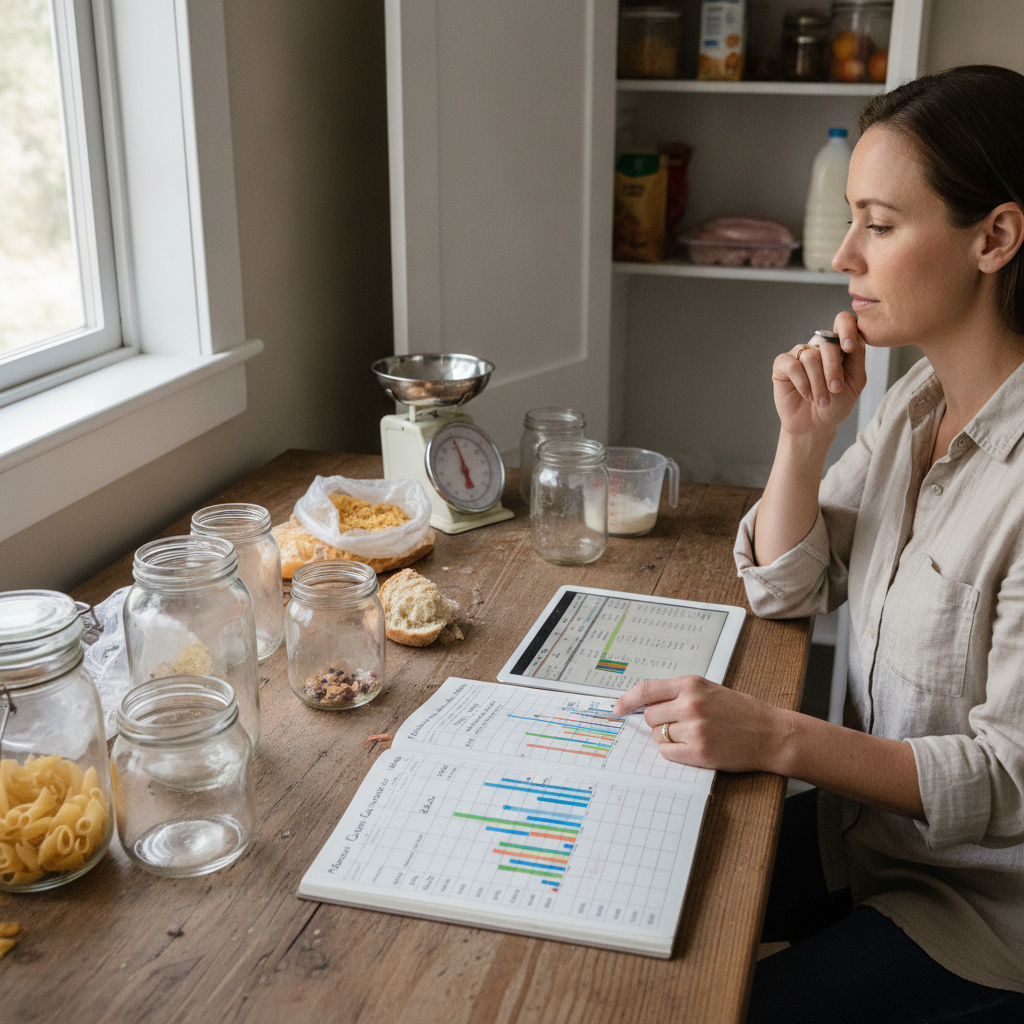
Most households spend more on groceries than they need to — not because they buy the wrong things, but because they restock before they actually run out. That gap between what you buy and what you use is where the money quietly disappears. Mapping your real consumption rate before you shop is one of the simplest systems you can put in place, and it costs nothing except a little attention.
Track What You Actually Finish Before You Buy More
Before your next grocery run, take five minutes to walk through your fridge, freezer, and pantry and note what's close to empty versus what still has a week or more left. Most people discover they have three half-used jars of the same condiment, two open bags of rice, or a produce drawer full of vegetables bought with good intentions. Restocking on top of existing stock is how food expires before it gets eaten. A quick visual audit before every trip resets that pattern and shows you what genuinely needs replacing.
Write Down How Long Each Staple Actually Lasts in Your Home
A bag of oats might last your household two weeks or two months depending on how often you eat breakfast at home. The shelf of a grocery store doesn't know your schedule — only you do. Spend one month keeping a simple note on your phone or a small whiteboard in the kitchen. Every time you finish something, jot down roughly when you opened it. After four or five cycles, you'll have real data on your actual usage pace, which makes restocking decisions precise instead of guesswork.
Separate Perishables From Pantry Items in Your Planning
Perishables and pantry staples behave completely differently, and treating them the same way in your shopping list is a reliable path to waste. Produce, dairy, and fresh proteins need to be bought close to when you'll use them, with quantities matched tightly to your meal plan for that week. Pantry items like canned tomatoes, dried pasta, or Kirkland-brand olive oil have long shelf lives and can be restocked less frequently. Splitting your grocery thinking into two distinct categories keeps perishables from piling up while pantry stock stays manageable.
Build a Simple Inventory Before You Open a Shopping App
Opening Instacart or a grocery app without checking what you already have is the fastest way to double-buy things you don't need. A five-minute walk-through before you open any shopping interface changes the entire quality of your list. You don't need elaborate spreadsheet software — a plain notes app or even a piece of paper works fine. The habit of checking before ordering or shopping is more valuable than any organizational tool you could download.
Match Your Restock Quantity to Your Real Weekly Rhythm
If you cook at home four nights a week, you need a different quantity of proteins and vegetables than someone who cooks seven. Buying for an idealized version of your schedule rather than your actual one is where most perishable waste is born. Take an honest look at how many times you realistically cook per week, order takeout, or eat lunch at home. Buying to that real number — not the aspirational one — means you finish what you buy instead of throwing out what you didn't get to.
Use a Running Low-Stock List Instead of Starting Fresh Each Week
Instead of building a new grocery list from scratch every week, keep a running list that you add to as things run low. Apps like AnyList or OurGroceries are built for exactly this, but a sticky note on the fridge works just as well. The moment you open the last can of chickpeas or pull the second-to-last coffee pod, that item goes on the list. This approach eliminates the memory game of trying to recall what you need while standing in an aisle, and it stops you from buying extras out of uncertainty.
Watch for Items That Accumulate and Adjust Your Buy Frequency
If you consistently have three or four of something on hand when you restock, you're buying it faster than you use it. Common culprits are things like salad dressing, specialty sauces, canned goods, and shelf-stable snacks that come in multipacks. Recognizing the pattern is more useful than beating yourself up about it. Simply extending the time between purchases for those items — or dropping your default quantity — gradually brings your stock level in line with your actual pace of use.
Plan Meals Before Shopping, Not After
Deciding what you'll cook after you get home from the store is a recipe for pantry overlap and fridge waste. When you plan five or six meals before you shop, your list becomes a precise tool instead of a general sweep through categories you think you might need. Stores like Trader Joe's or Whole Foods are designed to inspire impulse buying — and inspiration without a plan leads to ingredients that don't connect into actual meals. A rough weekly meal outline takes ten minutes and keeps every item you buy tied to a specific purpose.
Let Near-Empty Trigger the Restock, Not Habit or Anxiety
One of the most common reasons households overbuy is discomfort with running low. There's a psychological pull toward keeping shelves full that has nothing to do with actual need. Training yourself to let the near-empty point trigger restocking — rather than a vague sense that it's been a while — breaks the cycle of accumulation. For most staples, running the item down to its last use before replacing it is a completely sustainable approach, and it ensures you're always rotating stock instead of layering new product on top of old.
Mapping your household's real consumption rate is less about being meticulous and more about being honest with yourself. Once you know how long things actually last at your pace, shopping becomes a deliberate act instead of a reflexive one. The waste that inflates grocery bills month after month isn't usually dramatic — it's a steady drip of food bought too early, stocked too deep, and eventually thrown away. Closing that gap starts with a simple habit of looking before you list.