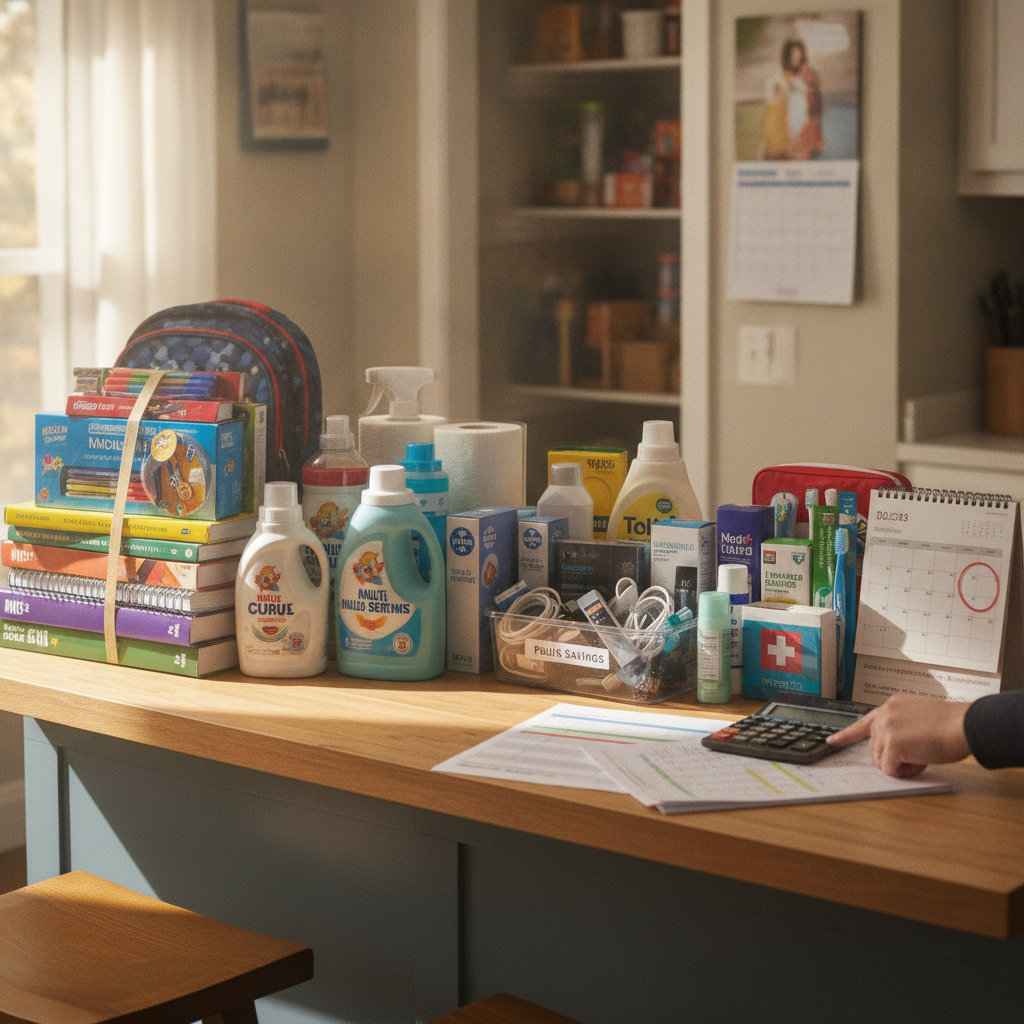
Most households replace things when they break, run out, or simply become impossible to ignore. That reactive approach feels practical in the moment, but it quietly costs more than almost any other spending habit you could change. Buying a new vacuum because the old one died last Tuesday means buying at whatever price exists that Tuesday — no comparison shopping, no timing advantage, no leverage.
Map Your Categories Before You Spend Anything
The first move is a simple one: write down every product category your household buys across a full year. Cleaning supplies, kitchen tools, clothing basics, bedding, personal care, tech accessories, outdoor gear — group them into clusters that share a natural purchase rhythm. Once you can see those clusters on paper, patterns emerge. You might notice that you've been buying new bath towels every time one gets worn out, rather than replacing the whole set in one deliberate cycle. Seeing the full picture changes how you think about each individual purchase.
Set One Annual Window Per Category Cluster
Once your categories are mapped, assign each cluster a single purchase window — a month or a short seasonal stretch where you evaluate, decide, and buy for that entire group. Clothing basics might land in February, when post-holiday clearances are deepest. Outdoor and garden tools fit naturally into late summer when retailers push inventory to make room for fall stock. Household linens often hit their best price points in January. Tools like Google Shopping or CamelCamelCamel let you verify whether a price is actually seasonal or just framed that way. The key is deciding in advance, not in the moment.
Stop Replacing Items One at a Time
Reactive replacement is expensive for a reason that's easy to miss. When you replace items individually as they fail, you're almost never buying during a favorable price window, and you lose the psychological leverage of comparing options across an entire category at once. Buying three quality kitchen knives together after researching brands like Victorinox gives you a cleaner decision than buying one knife three times under pressure. Consolidating your replacements into a single intentional event also makes it easier to set and stick to a per-category budget ceiling.
Use the Window to Audit, Not Just to Shop
Your annual purchase window shouldn't just be a buying session — treat it as an evaluation period. Before buying anything new, go through what you already own in that category. Which items are still performing well? Which have quietly degraded but not yet failed? Which do you own duplicates of without realizing it? Running a quick audit before spending prevents the common mistake of buying more of something you already have enough of. It also forces honest thinking about whether you're replacing something because it's genuinely worn out or because newer options look appealing.
Build a Simple Category Budget Ceiling
Once you know which categories you're addressing in a given window, assign each one a realistic spending ceiling for the year. This doesn't require complex spreadsheets. A simple note in an app like Notion or a physical notebook works just as well. The ceiling protects you from overspending during the window itself, which is a real risk — having permission to buy often feels like permission to upgrade everything. Knowing you've budgeted a fixed amount for, say, all personal care tools for the year makes individual decisions inside that window much cleaner and faster.
Time Your Windows Around Predictable Retail Cycles
Retail pricing follows predictable rhythms that most shoppers never consciously use. January is consistently strong for bedding, fitness equipment, and home organization products. Late summer brings genuine markdowns on patio furniture and grilling gear. Electronics tend to soften in price in the weeks after major product release announcements. Aligning your category windows to these cycles doesn't require obsessive tracking — it just requires deciding in advance which month serves each cluster best, then holding to that schedule rather than drifting back into reactive buying when something breaks unexpectedly.
Track What Each Category Costs You Annually
One of the clearest benefits of the purchase window approach is that it forces you to see what you actually spend per category across a full year. Most people dramatically underestimate these numbers because the purchases are scattered across twelve months and never totaled. When you consolidate your buying into a single window, the annual figure becomes visible and real. That visibility tends to produce better decisions — not austerity, but clarity. Knowing what you spent on cleaning supplies last year gives you a meaningful baseline for deciding what's reasonable this year.
Let the System Handle Urgency, Not Emotion
The hardest part of a purchase window approach is resisting the pull of urgency. Something breaks, something runs out, and the natural instinct is to replace it immediately. Building a small contingency reserve for genuine mid-cycle failures is reasonable — a broken coffee maker can't wait until February. But most urgency is softer than it feels. A worn bath mat is not an emergency. Keeping a short running list of items that need attention lets you capture those needs without acting on them immediately, so they feed into your next scheduled window instead of blowing your budget mid-cycle.
Buying things reactively keeps you permanently on the back foot — spending more, comparing less, and never quite seeing the full picture of what a category costs you each year. Grouping similar products into a single intentional annual window changes that dynamic completely. You gain pricing leverage, cleaner comparisons, and a real annual number to work against. The savings don't come from sacrifice; they come from timing and intention working together instead of against each other.