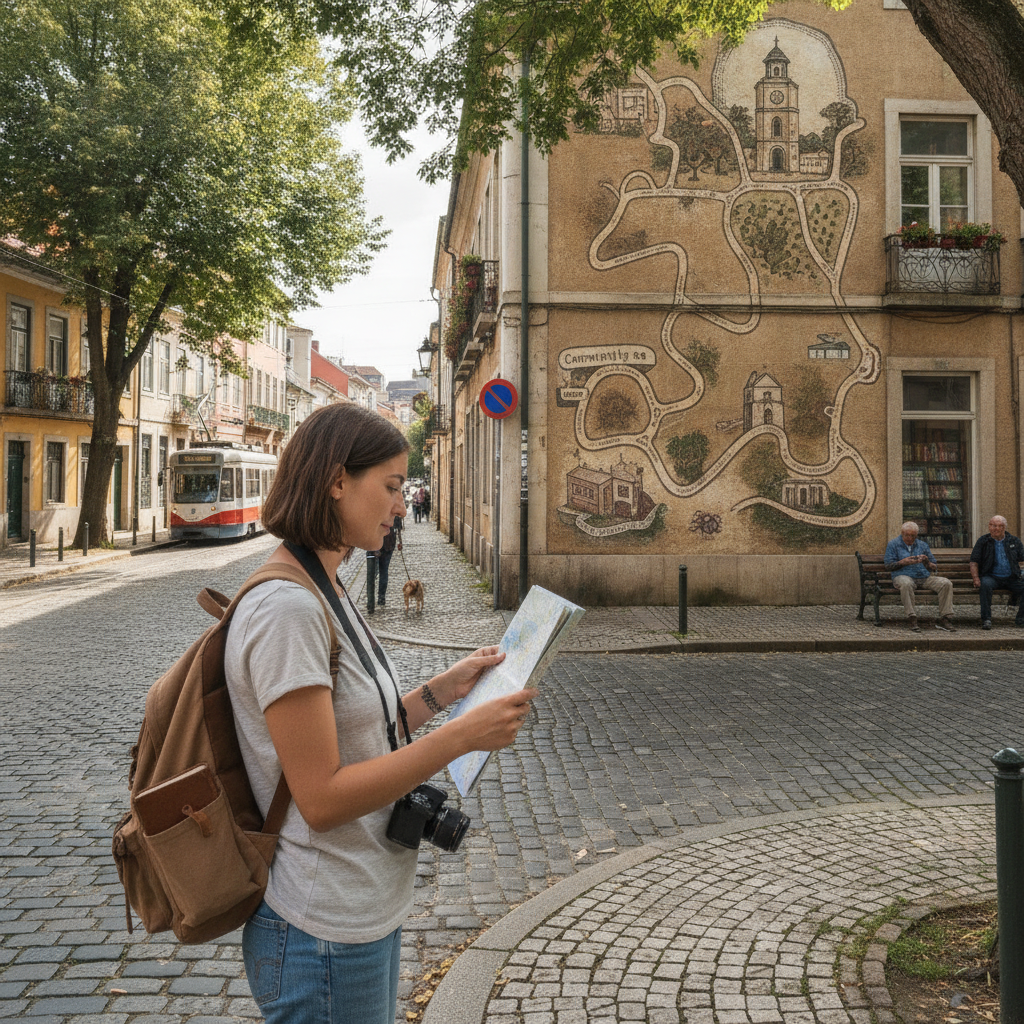
Most people know their city the way they know a familiar face — recognizable at a glance, but not deeply understood. They move through the same corridors every week: the commute, the grocery run, the handful of blocks surrounding their favorite coffee shop. The city shrinks to a circuit, and somewhere beneath that shrinkage, whole neighborhoods continue their quiet lives, unhurried and largely unseen.
There is a practice, increasingly common among urbanists and longtime city dwellers alike, that pushes back against this narrowing. It asks only one thing: once a month, choose a neighborhood you have never truly walked and go there without an agenda. No curated list, no algorithm, no restaurant reservation. Just presence, time, and the willingness to form your own impressions.
The Limits of App-Mediated Discovery
Travel and local discovery apps have become the dominant way most people decide where to go in their own cities. Platforms like Yelp, Google Maps, and Foursquare offer convenience that is genuinely useful — hours of operation, directions, filtered reviews. But convenience is not the same as understanding, and what these tools optimize for is efficiency, not immersion. An app surfaces the most-reviewed version of a neighborhood, which is rarely the most representative one. It sends users to the same dozen blocks that every other user visits, creating a kind of consensus geography that flattens the actual character of a place. The bookshop that has been on the same corner for thirty years doesn't always have a four-star profile, but it may tell you more about a neighborhood than any trending brunch spot ever could.
What a Mental Map Actually Means
The term *mental map* — borrowed from cognitive geography — refers to the internal spatial representation a person builds of a place through direct experience. Unlike a digital map, which is static and objective, a mental map is personal, layered, and emotionally textured. It encodes not just where things are but what they feel like: the way light hits a particular block in the late afternoon, the shift in architecture between two streets, the sound of a neighborhood at different hours. Researchers in urban psychology have long observed that people with richer mental maps of their cities tend to feel more at home in them, more capable of spontaneous decision-making, and more connected to the social fabric around them. A city known only through a phone screen is a city held at arm's length.
The Value of Returning Without Purpose
The monthly neighborhood walk works precisely because it removes the transactional quality that governs most urban movement. When someone visits a place without a specific errand or destination, attention disperses in productive ways. They notice the mix of old storefronts and new construction, the community bulletin board outside the hardware store, the way residents nod to one another on certain blocks and don't on others. These observations accumulate into something that cannot be downloaded. Neighborhoods like Pilsen in Chicago, Boyle Heights in Los Angeles, or Bedstuy in Brooklyn each carry distinct social histories that become legible only through unhurried presence — through walking the same street twice, eating somewhere that has no reviews, stopping simply because a doorway looks interesting. That quality of attention changes the walker as much as it informs them.
Building the Habit Over Time
The rhythm of one neighborhood per month is deliberately modest, which is part of what makes it sustainable. Twelve months yields twelve new places known with some texture, some depth. Over two or three years, a person builds what might be called a *psychogeographic literacy* — an understanding of how their city's parts relate to each other, what pressures different communities are under, where the edges of gentrification sit, which places have remained stable across decades. This kind of knowledge doesn't come from a single ambitious day of exploration; it comes from the compounding of small, consistent acts of attention. The mental map grows incrementally, each month's walk adding new color to the areas already explored, because neighborhoods reveal themselves differently depending on what you now know about the ones surrounding them.
Making the Practice Your Own
If you decide to take this up, the method can be as simple as choosing a neighborhood name from a transit map and getting off at an unfamiliar stop. Bring nothing goal-oriented — no shortlist of must-tries, no plan to photograph anything in particular. Give yourself two hours and let the neighborhood set the pace. Talk to someone working at a small shop if the opportunity arises naturally. Sit somewhere public long enough to watch the street change. On the way home, before the impressions fade, spend a few minutes writing down what surprised you — not ratings, not recommendations, just honest observations. Over time, those notes become a personal archive that no platform will ever generate for you, a record of the city as you actually came to know it, block by block and month by month.
The person who returns home from their twelfth neighborhood walk carries something different from the one who only ever moved through familiar circuits — not expertise exactly, but a kind of earned intimacy with the place where their daily life unfolds. The city that once shrank to a predictable loop has opened again, and the opening is irreversible. That is the quiet reward of the practice: not discovery as a destination, but as a way of staying genuinely present in the place you already call home.