Price assumptions are one of the most persistent forces shaping where people shop, and most of them are formed without a single comparison ever being made. A shopper walks past an independent hardware store, glances at a product in the window, and mentally files it under "too expensive" — not because they checked, but because independent retail has a reputation that chain retail has spent decades cultivating. That reputation, it turns out, is frequently wrong in ways that compound quietly over time.
The Assumption That Costs Shoppers More Than They Realize
The default belief that chain stores are cheaper than independent retailers is understandable. Big-box stores like Home Depot or Target have built their identities around volume pricing, and that messaging lands. But volume pricing applies selectively, and independent retailers often source products at competitive wholesale rates for their core categories. A locally owned kitchen supply shop, for example, may carry the same Lodge cast iron skillet at a price within a dollar or two of what Amazon lists — sometimes less, once shipping is factored out. The assumption of a price gap doesn't survive an actual check, but most shoppers never make that check.
Why Direct Product Comparison Is the Only Reliable Method
Benchmarking works when it's specific. Comparing a general sense of "prices seem high" at a local shop against a vague impression of chain pricing tells a shopper nothing useful. What changes the picture is identifying a single known product — a jar of Maldon sea salt, a specific Vitamix blending container, a standard box of Ticonderoga pencils — and pulling up its price at two or three chain sources before stepping into the independent store. That controlled comparison strips out the visual noise of boutique shelving and handwritten tags, which can make products feel premium-priced even when they aren't. The product becomes the unit of measure, and the data becomes actionable.
How Independent Retailers Compete on Margins You Don't Always See
Independent retailers often operate with tighter overall margins but sharper pricing on their anchor products — the items they know bring customers through the door. A neighborhood running shop may price popular Brooks or ASICS models nearly identically to a sporting goods chain, because running shoes are what that shop's reputation depends on. They can't afford to be meaningfully more expensive on the thing they're known for. Where pricing diverges is usually in secondary categories, accessories, or specialty items that chains stock opportunistically. Understanding this pattern helps shoppers know which categories to benchmark and which to evaluate differently, rather than treating the entire store as uniformly priced up.
The Cumulative Effect on Spending Patterns Over Months
Once a shopper benchmarks a local independent store and finds the pricing fair — even on two or three products — something shifts in how they approach that store going forward. The mental tax of assuming everything costs more starts to lift. They begin stopping in more regularly, which means they're exposed to the store's actual range, its staff knowledge, and its product curation. Over the course of several months, those visits tend to produce more considered purchases and fewer impulse buys driven by the frictionless convenience of one-click ordering. Spending doesn't necessarily increase — it reallocates, often toward items with better quality per dollar and fewer returns. That shift is gradual, but it's real, and it starts with a single honest comparison.
What Price Benchmarking Reveals About Local Product Selection
Independent retailers often carry versions of products that chains don't stock at all. A local kitchen shop in a neighborhood like Portland's Mississippi Avenue or Chicago's Wicker Park might carry a mid-tier Japanese knife brand that sits between the budget options at a chain store and the high-end versions that require a specialty order. Benchmarking that knife against comparable chain offerings reveals not just price differences but value differences — blade quality, handle construction, and warranty terms that a chain's price point doesn't match. The comparison teaches shoppers to evaluate products rather than just price tags, which is a more durable skill than any single discount.
Making the Habit Practical Without Turning Shopping Into Research
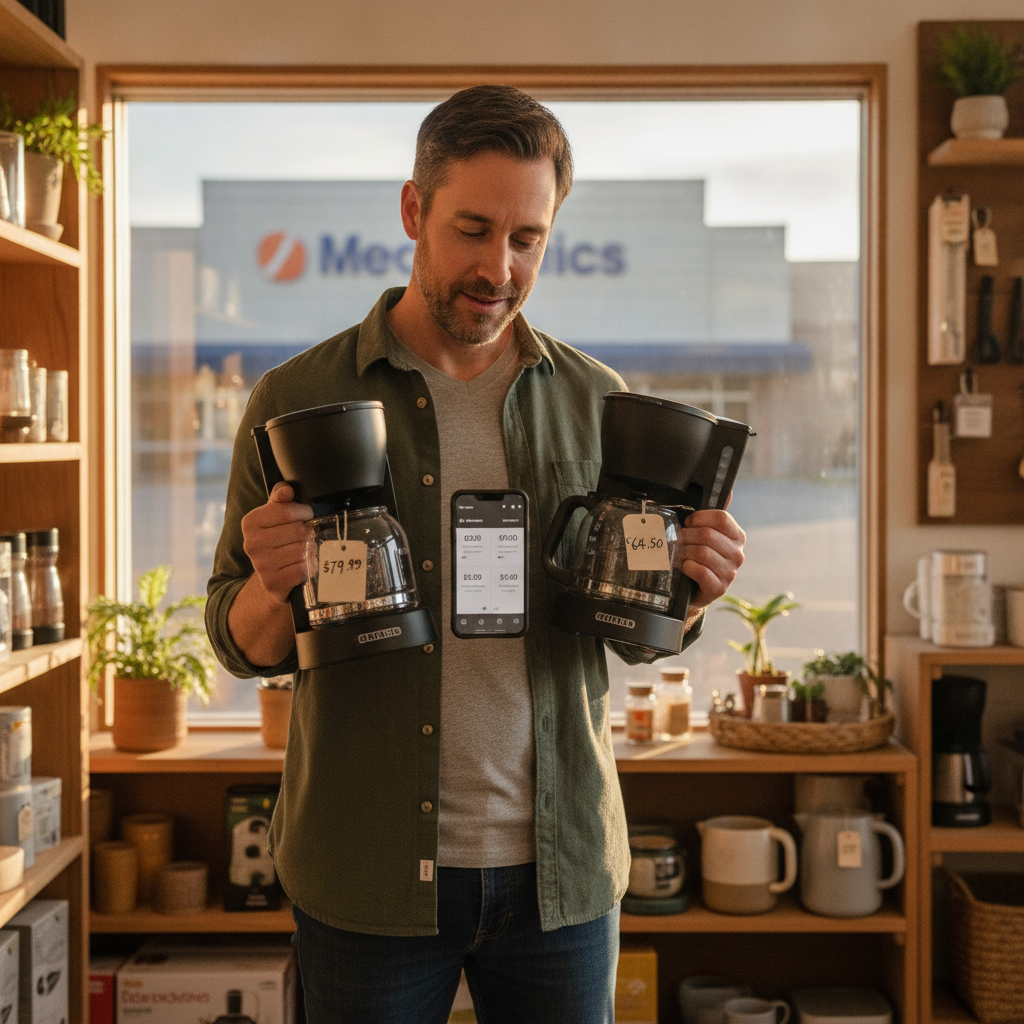
You don't need a spreadsheet or a dedicated app to make this work. The next time you're browsing a local independent shop and spot a product you already know — a brand you've bought before, a category you shop regularly — pull out your phone and check what Target, Walmart, or Amazon has it listed for right now. Give yourself sixty seconds. That single check costs almost nothing and produces real information. If the prices are within a few dollars, stay and buy local. If the independent store is running lower — which happens more than most shoppers expect — make a note of it. Apps like Flipp or a basic Google Shopping search make the benchmark fast enough that it doesn't disrupt the browsing experience at all. Over time, the stores that consistently clear that bar become your defaults, and the stores that don't get treated accordingly.
The broader shift happening in retail is one where informed shoppers, armed with better tools and a willingness to check rather than assume, are redistributing their spending in ways that reflect actual value rather than brand familiarity. Independent retailers that price competitively on their core products are finding that shoppers who benchmark once tend to return repeatedly. That dynamic rewards honesty in pricing and gives local businesses a genuine path to competing with chains — not on scale, but on trust built through transparency. For shoppers, the habit of a quick check before a quick dismissal is a small practice with a surprisingly long reach.