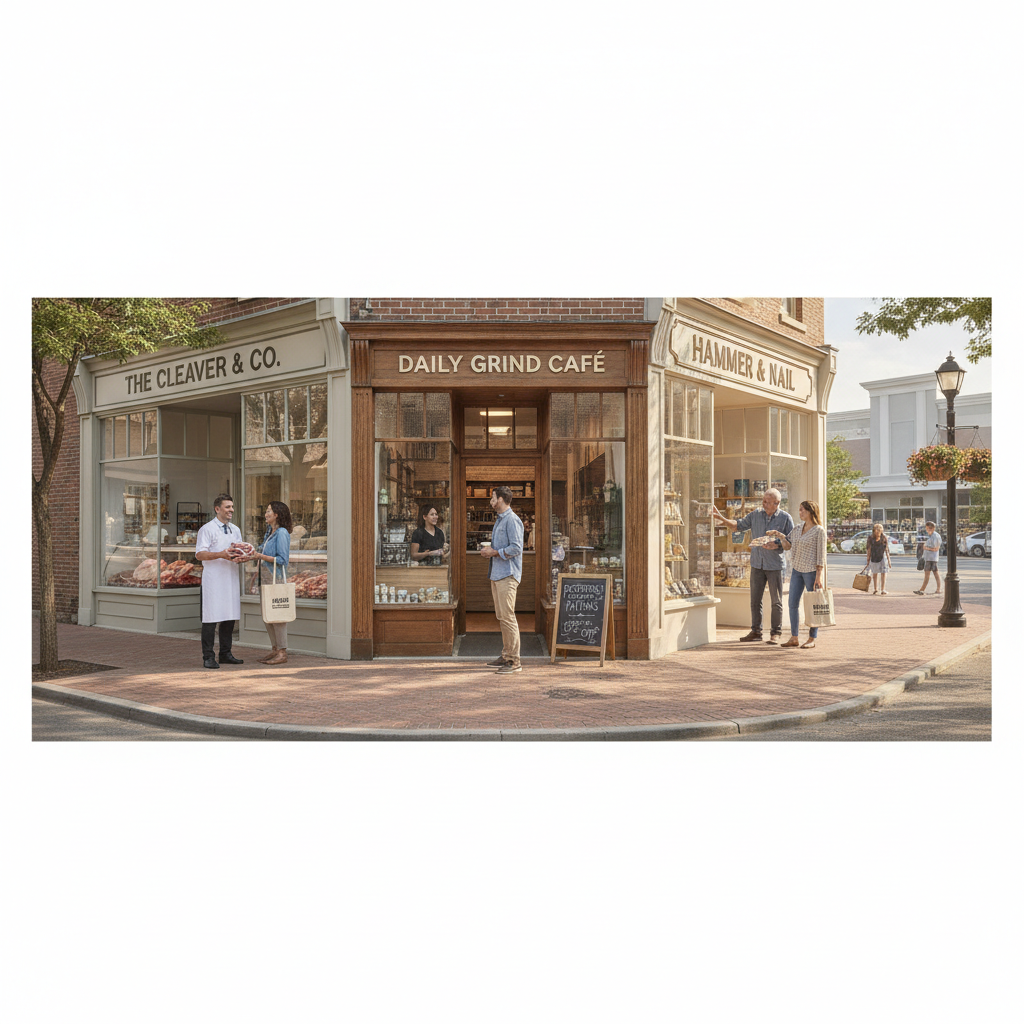
Most households spread their spending across dozens of businesses without ever building meaningful relationships with any of them. The result is a kind of commercial anonymity — serviceable, but transactional in the worst sense. Shoppers get standard pricing, standard wait times, and no particular reason to feel loyalty in either direction. A quieter, more strategic approach exists: identifying just two or three anchor local businesses for recurring needs and returning to them consistently enough that the relationship itself becomes a financial and practical asset.
Why Concentrated Local Loyalty Outperforms Scattered Spending
Chain stores are engineered for volume and consistency, not for individual relationships. A hardware associate at a national home improvement chain has little ability — and often little incentive — to offer a returning customer anything beyond what the register allows. Independent local businesses operate differently. The owner of a neighborhood plumbing supply shop in a district like Portland's Sellwood or Chicago's Logan Square has discretion over pricing, timelines, and which customers get called first when a hard-to-find part comes in. That discretion becomes a genuine advantage when a household has demonstrated consistent loyalty over months or years.
The Mechanics of Relationship Discounts at Independent Businesses
Relationship discounts rarely appear on signs or loyalty cards. They tend to emerge organically when a business owner recognizes a reliable customer and decides, without being asked, to offer better terms. A local hardware store might start setting aside seasonal inventory for a customer who regularly restocks there each spring. An independent paint supplier might waive a delivery minimum for a homeowner they've worked with over three projects. These aren't formal programs — they're the natural behavior of small business owners who understand that a loyal customer represents predictable revenue, and who have the freedom to reward that accordingly. Apps like Thumbtack or Angi can help someone find local providers initially, but the relationship that follows is built entirely in person, over time.
Service Priority as a Hidden Benefit Most Households Never Access
Beyond pricing, the more valuable advantage of anchor business relationships is queue position. When a pipe bursts or an appliance fails, the household that has spent two years ordering supplies from a local plumbing and HVAC shop gets a very different response than the stranger calling for the first time. Priority scheduling isn't always advertised, but it's almost always real. Independent contractors and specialty shops manage their time with a degree of flexibility that franchise operations cannot offer. A known, trusted customer asking for urgency gets a fundamentally different answer than an unknown caller, regardless of what either party is willing to pay.
Choosing the Right Anchor Businesses to Build Around
The selection process matters as much as the commitment itself. Effective anchor businesses share a few consistent traits: they specialize in categories that generate repeat needs, they're staffed by people with genuine product or trade knowledge, and they've been operating long enough to have established community roots. Hardware and home supply shops, local nurseries, independent cleaning supply retailers, and specialty food purveyors tend to work well in this model because they serve genuinely recurring needs. Trendy boutiques or single-occasion shops don't anchor well — the spending frequency isn't high enough to build the kind of familiarity that unlocks preferential treatment over time.
How to Build the Relationship Without It Feeling Transactional
You don't need to announce that you're becoming a loyal customer. The relationship builds naturally when you show up consistently, ask questions that signal genuine engagement with the business, and pay without friction. Mentioning a previous purchase or referencing a conversation from a prior visit tells a business owner that you remember them — and that you're not shopping from a list of interchangeable vendors. Referring a neighbor or colleague to the same shop accelerates the relationship faster than almost anything else. Independent business owners in tight-knit neighborhoods like Brooklyn's Park Slope or Austin's South Congress area remember referrals, and they respond to them with generosity that rarely shows up in formal loyalty structures.
Making the Two-or-Three Anchor Model Work for Your Household
Start by mapping your household's three highest-frequency spending categories outside of grocery staples. For many households, this means home maintenance and repair supplies, garden or outdoor needs, and a cleaning or household product category. Then identify one genuinely well-regarded independent business in each area — checking platforms like Yelp or Nextdoor for sustained, specific praise rather than volume of reviews. Commit to directing at least 80 percent of that category's spending to your chosen anchor for a full season before evaluating the relationship. Avoid splitting the same category across multiple local shops, which dilutes your visibility as a customer. The goal is to become recognizable and reliable, not merely occasional. Once a business knows your name and anticipates your return, the relationship begins working for you in ways that no chain store loyalty program has ever been designed to replicate.
Spending concentrated rather than scattered is one of the quieter forms of financial leverage available to households that pay attention. When a local business recognizes a customer as a genuine anchor rather than a passing transaction, pricing flexibility, service priority, and informal perks follow almost automatically. The chain store model trades that possibility away in exchange for scale. Two or three well-chosen local relationships, built steadily over time, return more practical value than the convenience of shopping everywhere and mattering nowhere.